Tag Archives: North Shore poets

Another slight rewrite

My friend Melissa Varnavas and I got together for a little poetry the other evening, and she pointed out a problem I have a lot — how to end it! The poem, “Advice to the Cat …,” which you can find in the prior post, is a perfect example. I like to wrap things up somehow — have a slowdown, a kaput, an ending. And, I overdo it. I overdid it in this one.

Melissa thought I should just end it at “abeyance.” I now think I could get away with just the word, “Hush,” on  a line of its own, separated from the prior stanza by a space.

I do like an ending. …

Any other thoughts? Other flaws? I know I am not a super poet. I would like to get to be a semi-decent one, so I am open to constructive criticism, with a reason why one thinks that way.

Go to it!

And remember, the Forum meets on Saturday, Jan. 22, 11 a.m. at the Beverly Public Library.

Also, we are again sponsoring our national Naomi Cherkofsky contest, any form, any subject, 40 line limit, due by March 1. For details, simply click on the tab at the top that tells you about contests. In general, however, it is open to poets 18 and older, and the poem should not have been published previously.  There is a $3 per poem entry fee, payable to the North Shore Poets’ Forum, with a maximum of 5 poems per poet. There will be a first prize of $50, a second prize of $30, and a third prize of $20. No one poet can win more than one monied prize. There will also be 7 to 10 honorable mentions, depending on the judge.

Our April meeting features the winning poets, who are then followed by anyone who would like to read. It is always a great time, and here’s hoping you can make it. Again, it is at the Beverly Public Library, beginning at 11 a.m. See Meetings tab.

Please e-mail me, ckohare2@yahoo.com, if you have any questions. Since we are a volunteer group, you could help out by spreading the word about the contest to all your poetic friends.

Cheers… and peace

Happy blizzard day

It is gorgeous, and marvelously disruptive of the same old same old. Of course, my son and husband don’t appreciate the wonderfulness of all that wet snow clinging so fast to our over-tall yews, which are draped over our car, completely hiding it. After all, they have to clean it off, as well as the driveway and walkways. My muscles can only manage a little bit of the heavy-duty stuff. So, I get to admire the beauty of it all.

In any case, I do want to remind our friends of the forum’s next meeting, on Saturday, Jan. 22, 11 a.m. at the Beverly Public Library. Elva Nelson has promised a program on the sonnet.  All are also encouraged to bring poetry for gentle criticism.

And, I’ll take my chances here. I have rewritten this poem a bit, so some of you will recognize it. I hope it’s better than it was. Any comments are welcome. I’m always learning, always a novice, when it comes to poetry.

Advice to the Cat during a Blizzard

By Cathryn Keefe O’Hare

Snow danced in freestyle

through the clouded heavens

into our backyard

landing deeply.

….

So, no, kitty, you cannot go out.

You’d sink into the frigid fluff.

Just listen to the wind sail through

the clattering branches of the trees.

Watch with me the way the yews

accommodate the lavish icing

as if it were a fancy frosting,

as if it were their destiny

to be so beautifully laden and bent down.

See the way the yard fills up

silently, the lilacs sit

so still between the gusts,

as if holding themselves tight,

as if holding themselves in abeyance.

Note how they all suffer and forbear.

Marvel, now, and hush.

Holidays trigger thoughts of home

Between Thanksgiving and New Years many of us see more of our extended families than at any other time of the year. It’s great, most of the time, and it’s not so great some of the time. Those statements can be reversed for some readers. But, if we didn’t have them, what would we do?

My cousin Martha recently mused on this after a Thanksgiving get-together at my brother Frank’s home. This is an annual tradition… well, almost always at his house, although sometimes at my brother Jim’s house or my sister Camilla’s house. The three of them live close to one another, so we divide the extended family for dinner at the three homes and then end up for desserts at Frank’s.

Anyway, poetry is always a part of the after-dinner get-together. We all read from our favorite poets, with candles glowing, the fire warming, and the after-dinner drinks soothing all spirits.

The five siblings and some of the extended family then move to the piano, driving others of the extended family into far reaches of the house to avoid the tympani of our voices, which at this point we think are terrific as we warble out “My Funny Valentine,” “Tea for Two,” “The Man I Love,” and other such old standards. Among our favorites are songs from the “Fantastics,” like “Soon It’s Going to Rain.” And, we usually wind up with “Oh Come, Oh Come Emanuel,” to begin the Advent and Christmas season.

We’re wonderful, I must say. And, the rest of the family is fantastic to put up with us all these years.

Anyway, Martha was reflecting on “family” and such during Thanksgiving, and she couldn’t quite remember a poem by Frost that said much on the topic. When she got home, she remembered the very great poem, which she then sent to me. Of course, you are probably familiar with it, too. Here it is:

The Death of the Hired Man
by Robert Frost
Mary sat musing on the lamp-flame at the table
Waiting for Warren. When she heard his step,
She ran on tip-toe down the darkened passage
To meet him in the doorway with the news
And put him on his guard. "Silas is back."
She pushed him outward with her through the door
And shut it after her. "Be kind," she said.
She took the market things from Warren’s arms
And set them on the porch, then drew him down
To sit beside her on the wooden steps.            

"When was I ever anything but kind to him?
But I’ll not have the fellow back," he said.
"I told him so last haying, didn’t I?
‘If he left then,’ I said, ‘that ended it.’
What good is he? Who else will harbour him
At his age for the little he can do?
What help he is there’s no depending on.
Off he goes always when I need him most.
‘He thinks he ought to earn a little pay,
Enough at least to buy tobacco with,
So he won’t have to beg and be beholden.’
‘All right,’ I say, ‘I can’t afford to pay
Any fixed wages, though I wish I could.’
‘Someone else can.’ ‘Then someone else will have to.’
I shouldn’t mind his bettering himself
If that was what it was. You can be certain,
When he begins like that, there’s someone at him
Trying to coax him off with pocket-money,—
In haying time, when any help is scarce.
In winter he comes back to us. I’m done."            

"Sh! not so loud: he’ll hear you," Mary said.  

"I want him to: he’ll have to soon or late."  

"He’s worn out. He’s asleep beside the stove.
When I came up from Rowe’s I found him here,
Huddled against the barn-door fast asleep,
A miserable sight, and frightening, too—
You needn’t smile—I didn’t recognise him—
I wasn’t looking for him—and he’s changed.
Wait till you see."  

"Where did you say he’d been?"            

"He didn’t say. I dragged him to the house,
And gave him tea and tried to make him smoke.
I tried to make him talk about his travels.
Nothing would do: he just kept nodding off."  

"What did he say? Did he say anything?"            

"But little."  

"Anything? Mary, confess
He said he’d come to ditch the meadow for me."  

"Warren!"  

"But did he? I just want to know."            

"Of course he did. What would you have him say?
Surely you wouldn’t grudge the poor old man
Some humble way to save his self-respect.
He added, if you really care to know,
He meant to clear the upper pasture, too.
That sounds like something you have heard before?
Warren, I wish you could have heard the way
He jumbled everything. I stopped to look
Two or three times—he made me feel so queer—
To see if he was talking in his sleep.
He ran on Harold Wilson—you remember—
The boy you had in haying four years since.
He’s finished school, and teaching in his college.
Silas declares you’ll have to get him back.
He says they two will make a team for work:
Between them they will lay this farm as smooth!
The way he mixed that in with other things.
He thinks young Wilson a likely lad, though daft
On education—you know how they fought
All through July under the blazing sun,
Silas up on the cart to build the load,
Harold along beside to pitch it on."  

"Yes, I took care to keep well out of earshot."  

"Well, those days trouble Silas like a dream.
You wouldn’t think they would. How some things linger!
Harold’s young college boy’s assurance piqued him.
After so many years he still keeps finding
Good arguments he sees he might have used.
I sympathise. I know just how it feels
To think of the right thing to say too late.
Harold’s associated in his mind with Latin.
He asked me what I thought of Harold’s saying
He studied Latin like the violin
Because he liked it—that an argument!
He said he couldn’t make the boy believe
He could find water with a hazel prong—
Which showed how much good school had ever done him.
He wanted to go over that. But most of all
He thinks if he could have another chance
To teach him how to build a load of hay——"            

"I know, that’s Silas’ one accomplishment.
He bundles every forkful in its place,
And tags and numbers it for future reference,
So he can find and easily dislodge it
In the unloading. Silas does that well.
He takes it out in bunches like big birds’ nests.
You never see him standing on the hay
He’s trying to lift, straining to lift himself."  

"He thinks if he could teach him that, he’d be
Some good perhaps to someone in the world.
He hates to see a boy the fool of books.
Poor Silas, so concerned for other folk,
And nothing to look backward to with pride,
And nothing to look forward to with hope,
So now and never any different."             

Part of a moon was falling down the west,
Dragging the whole sky with it to the hills.
Its light poured softly in her lap. She saw
And spread her apron to it. She put out her hand
Among the harp-like morning-glory strings,
Taut with the dew from garden bed to eaves,
As if she played unheard the tenderness
That wrought on him beside her in the night.
"Warren," she said, "he has come home to die:
You needn’t be afraid he’ll leave you this time."             

"Home," he mocked gently.  

"Yes, what else but home?
It all depends on what you mean by home.
Of course he’s nothing to us, any more
Than was the hound that came a stranger to us
Out of the woods, worn out upon the trail."  

"Home is the place where, when you have to go there,
They have to take you in."  

"I should have called it
Something you somehow haven’t to deserve."             

Warren leaned out and took a step or two,
Picked up a little stick, and brought it back
And broke it in his hand and tossed it by.
"Silas has better claim on us you think
Than on his brother? Thirteen little miles
As the road winds would bring him to his door.
Silas has walked that far no doubt to-day.
Why didn’t he go there? His brother’s rich,
A somebody—director in the bank."  

"He never told us that."             

"We know it though."  

"I think his brother ought to help, of course.
I’ll see to that if there is need. He ought of right
To take him in, and might be willing to—
He may be better than appearances.
But have some pity on Silas. Do you think
If he’d had any pride in claiming kin
Or anything he looked for from his brother,
He’d keep so still about him all this time?"  

"I wonder what’s between them."             

"I can tell you.
Silas is what he is—we wouldn’t mind him—
But just the kind that kinsfolk can’t abide.
He never did a thing so very bad.
He don’t know why he isn’t quite as good
As anyone. He won’t be made ashamed
To please his brother, worthless though he is."  

"I can’t think Si ever hurt anyone."  

"No, but he hurt my heart the way he lay
And rolled his old head on that sharp-edged chair-back.
He wouldn’t let me put him on the lounge.
You must go in and see what you can do.
I made the bed up for him there to-night.
You’ll be surprised at him—how much he’s broken.
His working days are done; I’m sure of it."             

"I’d not be in a hurry to say that."  

"I haven’t been. Go, look, see for yourself.
But, Warren, please remember how it is:
He’s come to help you ditch the meadow.
He has a plan. You mustn’t laugh at him.
He may not speak of it, and then he may.
I’ll sit and see if that small sailing cloud
Will hit or miss the moon."  

It hit the moon.
Then there were three there, making a dim row,
The moon, the little silver cloud, and she.  

Warren returned—too soon, it seemed to her,
Slipped to her side, caught up her hand and waited.  

"Warren," she questioned.  

"Dead," was all he answered.
© 2010, Academy of American Poets. All Rights Reserved.

Come to the meeting!

The North Shore Poets’ Forum meets tomorrow at the Beverly Public Library, 11 a.m. to 1 ish. Melissa Varnavas is presenting a program on imagery, which she will illustrate with Rilke’s poem “Bowl of Roses.”  Come!

BOWL OF ROSES

You saw angry ones fume, saw two boys
clump themselves together into a something
that was pure hate, t in the dirt
actors, piled-up exaggerators
careening horses crashed to the ground
their gazes discarded, baring their teeth
as if the skull peeled itself out through the mouth. 

And now you know how these things are discarded
for here before you stands a full bowl of rose
which is unforgettable and brimming
with ultimate instances of being, of bowing down,
of offering, of being unable to give, of standing there,
almost as a part of us: ultimate for us too.

Noiseless living, opening without end
filling space without taking space from the space
that all the other things in it diminish
almost as if an outline, like something omitted
and pure inwardness with much curious softness
shining into itself right up to the brim
is anything as know to us as this?

And this: that a feeling arises
because petals are being touched by petals?
And this: that one opens itself like a lid,
and beneath lie many more eyelids,
all closed, as if, tenfold asleep, they
must damp down an inner power to see.
And above all this: that through these petals
light has to pass. Slowly they filter out
from a thousand skies the drop of darkness
in whose fiery glow the jumbled bundle
of stamens becomes aroused and rears up.

And look, what activity in the roses:
gestures with angles of deflection so small
no one would notice them, were it not for
infinite space where their rays diverge.

See this white one, so blissfully opened,
standing among its huge spreading petals
Like a Venus upright in her shell,
And look how that blushing one turns,
as if confused, toward the cooler one,
and how the cooler one, impassive, draws back,
and the cold one stands tightly wrapped in itself
among these opened ones, that shed everything.
And what they shed, how it can be
at once light and heavy, a cloak, a burden,
A wing, and a mask, it all depends,
and how they shed it: as before a lover.

Is there anything they can’t be: wasn’t this yellow one
that lies here hollow and open, the rind
of a fruit of which the same yellow,
more intense, more orange-red, was the juice?
And this one, could opening have been too much for it,
since, touched by air, its indescribable pink
has picked up the bitter aftertaste of lilac?

And isn’t this batiste one a dress, with
the chemise still inside it, soft and breath-warm,
both garments flung off together
in morning shade at the bathing pool in the woods?
And this opalescent porcelain,
fragile, a shallow china cup
filled with little lighted butterflies,—
and this, containing nothing but itself.

And aren’t’ they all doing the same: simply containing themselves,
if to contain oneself means: to transform the world outside
and wind and rain and patience of spring
and guilt and restlessness and disguised fat
and darkness of earth at evening
all the way to the errancy, flight, and coming on of clouds,
all the way to the vague influence of the distant stars
into a hand full of inwardness.

Now it lies free of cares in the open roses.

Part of the process

Web administrator’s note: Thanks, Melissa, for this great essay.


By Melissa Varnavas

An MFA teaches you the mechanics of good writing, sure. But just as important are the lessons learned regarding one’s own creative process. In Drawing on the Artist Within (Simon & Schuster, Inc., 1987), author Betty Edwards outlines five essential stages of creativity: “first insight;” “saturation;” “incubation;” “realization” (indicated as the “ah-ha!” moment); and “verification”.

When I sent my application to Pine Manor College’s (PMC) MFA program, I was firmly in the “realization” stage of Edwards’ creativity curve. I’d “incubated” in my professional career, and come to the conclusion that I could begin another career, a career I always wanted, a career as a writer. The idea was like an epiphany. The letter of acceptance from PMC Director Meg Kearney was my verification. A month later, however, I was back at “first insight” learning how much I actually did not know about poetry and the craft of writing.

Those first months were full of self-indulgent sobbing: “What am I doing here?” (I’m a bit of a drama queen.) Until my former professor, poet Ray Gonzales, offered the seemingly simplistic pearl of wisdom—“What do you mean? You’re here to write, aren’t you? So, write.”

Of course I headed off to get my MFA to learn how to write, to become a better poet, to learn (perhaps most importantly) what makes a poem a poem.  And I did learn these things under the tutelage of numerous kind and patient poets, much as I learned over the years from the kind and patient tutelage of the wonderful community of poets we have in the North Shore Poets’ Forum, the Massachusetts State Poetry Society, the Tin Box Poets and so many more.

The quest to become a better poet and discern what makes a poem a poem is still the subject of my creative search.

As I approach the year anniversary of my graduation I continue to answer the skeptical regarding the worth of my degree. “So,” the vaguely interested ask, “what have you done with your degree?”

I have not published a poem, or penned a thrilling essay, or begun a fictional treatise of the ills of believing in an ill-fated world. But I am sure that at any moment one of the 15 or so perfectly-formed poems currently out in the world will find a home. Any minute now my phone is going to ring. Any. Minute. Now.

Okay, so the phone’s not ringing off the hook, and I haven’t become an international success. Still, I am not discouraged. I believe in the creative process. I believe in the craft lessons learned during my graduate work. I believe in the old “ass-in-chair” adage which implies that being a writer means saturating oneself in the continuous process of reading, writing, and living.

That’s not to say I didn’t take some time off after completing my degree. Of course I did. I spent about two months in hibernation. I’d never seen the TV show Lost before then and fell into nearly a month of continuous viewing. And I spent some time simply living.

Come March, I attacked poetry again like a beset warrior (armed with only a broken sword), and sent out poems from my creative thesis. I got back to writing.

In the spring, I returned to my garden after two years to find it overgrown; I opened my eyes to a mess of unfinished house projects. In the summer, I helped my niece plan her wedding. We celebrated my husband’s birthday with a trip to Las Vegas. I spent some more time simply living.

This fall, I re-entered the local literary community, rejoining groups like the Forum, and I recently joined the Thursday Theatre of Words & Music and the Salem Writers Group. I’ve also returned to the collection of notebooks steadily accumulating on my shelves to find some not-so-perfectly formed poems waiting for my attention. I am back to writing, again.

The best part of being on the other side of graduate schooling is that not only do you not have a 40-page paper due at the end of every month but you can have another glass of wine and read another book and write some more and read some more and not worry so much about the end product.

But here I am again. Writing again. Back at the beginning of the process, somewhere between the incubation of a poem(s) and the realization of its completion. After an essay is written or a poem poured out, I lapse into the day-to-day rigors of home and family and work, overwhelmed by the question I had that first month of my schooling: What am I doing here? Why should we bother writing poems?

While I joke about the millions poetry will miraculously procure for me in royalties from my first book, I know that I am simply continuing to do what I have always done, what Ray Gonzales so aptly pointed out that first semester—I am a writer so I’m writing.

So, don’t worry if life gets hectic and you step away from your poems for a bit of life “saturation” before finding poetic “inspiration”; you’ll keep writing too. It’s all part of the process.

A special guest will be joining us

The North Shore Poets’ Forum will be enjoying a special guest at the Oct. 16 meeting, David Kristin, who happened upon the Mass. State meeting in Winthrop last week and really impressed those of us in attendance. He recites excellent poems by heart. He is more of a performer, and he calls his recitations “performance.” He is devoted to poetry. I will let him speak for himself, however, rather than try to imitate his great spirit and talent.

Claire Keyes, who was supposed to do a program on D.H. Lawrence, was unhappy to discover that she had a conflict that week. She might be able to do it later.  Here’s hoping, as she is so wonderfully erudite and conveys her knowledge so well.

In the meantime, be sure to come to the meeting at the Beverly Public Library on Saturday, Oct. 16, 11 a.m. to 1 p.m.

Forum begins new season

Post by Melissa Varnavas, with much appreciation from web master Cathy.

Isn’t it funny how we seem to organize our lives on two different calendars–one that coincides with the calendar year and another which acknowledges that we simply do not process time or activities the same way in summer? Anyway, when I heard that September 18th was the NSPF’s first meeting of the “year,” I blocked out my calendar to attend.

“No,” I told my husband. “I am not working on the basement project today.”

I’d been in need of a little poetry “refresher” and I wanted to make sure nothing interfered.

One of the things I love best about NSPF meetings is how they leave you feeling energized, motivated to go home and read more, write more. I am always jealous of anything that takes me away from reading or writing after our 11 a.m. to 1 p.m. sojourn into poetic musings.

Everyone has busy lives, and I often need to rush from the meeting to take care of my nephews or accommodate my husband or complete some house project we’ve started. But it’s too hard to pull myself back to the real world after a NSPF event. Frequently, I leave those waiting for me in the “real world” disappointed as I arrive late and disgruntled being pulled from leisurely discussions of CK Williams or Emily Dickinson.

This past weekend a similar story developed.

Cathryn charged the group with bringing a few poems from a favorite author to share. Roberta Hung gave an interesting presentation regarding Emily Dickinson. She cited examples from Dickinson’s work to illustrate the influence of the famous artist’s “real” life on her “creative” one. (I hope that she’ll share her research so Cathy can publish it here. That way those who didn’t get a chance to come to the meeting can read what those in attendance were so lucky hear.) Then Mary Miceli explored a few poems of Mary Oliver’s and Cathryn offered a few from C.K. Williams.

After a little lunch we all sat back down to enjoy the reading of our own members’ draft poems. We were very lucky to have Claire Keyes, Amy Dengler, Marcia Molay, Roberta Hung, Mary Miceli, Elva Nelson,  Gladys Rydstrom, Olga Kronmeyer and Ellie Lataweic, as well as me (Melissa) and Cathryn.

Of course we did start the meeting off with some discussion of business and a tentative schedule was set for the upcoming year that I’m sure Cathy will be talking about soon. (Note from Cathy, aka Cathryn: Claire can’t do the workshop she had planned for October. Any ideas?) And as usual, the meeting tapered off into smaller conversations and milling around cars in the library parking lot. We just can’t get enough talk about poetry, can we?

And although I say I blocked off my day… Sure enough I ended up sweeping out the basement when I got home. Not to worry though. A little bit of NSPF goes a long way toward rejuvenating the poetic soul.

Poets’ Forum Schedule 2010-11

The North Shore Poets’ Forum meets (usually) on the third Saturday of each month at the Beverly Public Library from 11 a.m. to about 2 p.m. There are exceptions, for instance, when the date would interfere with holidays or meetings of the Massachusetts State Poetry Society, of which the forum is now a chapter.

The December meeting is a joint meeting of the two organizations, held at the library on the first Saturday of December.

We’ll let you know if there are changes to the schedule and what our topics will be after our first meeting on Sept. 18. So, this is tentative for now.

The forum, like the MSPS, hopes to encourage members to learn more about the art and craft of poetry by studying well-regarded poets, introducing new forms, and delving into what makes and inspires a poem.

In that spirit, we ask that you please bring a favorite poet’s poems to introduce to the group on Sept. 18, and please think about a topic you might like to explore further and bring to the group during the coming months.

This promises to be a busy meeting, since we have to go over the schedule. But, if we have time, we’ll have gentle critique of member poems, so bring one or two just in case.

North Shore Poets’ Forum Schedule, 2010-11

9/18/2010

Sat. 11:00 AM – 2:00 PM Sohier Room

10/16/2010

Sat 11:00 AM – 2:00 PM Sohier Room

11/20/2010

Sat 11:00 AM – 2:00 PM Fogg Room

12/4/2010

Sat 11:00 AM – 3:00 PM Sohier Room

1/22/2011

Sat 11:00 AM – 2:00 PM Sohier Room

2/19/2011

Sat 11:00 AM – 2:00 PM Sohier Room

3/19/2011

Sat 11:00 AM – 2:00 PM Sohier Room

4/16/2011

Sat 11:00 AM – 2:00 PM Sohier Room

5/21/2011

Sat 11:00 AM- 2:00 PM Sohier Room

6/18/2011

Sat 11:00 AM – 2:00 PM Sohier Room

Summer outing included great food

Someone has said that poets love food, and that was proved true on Saturday when the Mass State Poetry Society met under the trees at the Saugus Iron Works for the annual summer outing. Of course, the poetry was wonderful, as usual. And, I heard the program was terrific. Unfortunately, I arrived too late for that.
But, I arrived just in time for the great food. I love other people’s salads, of which there were a number, from green to various pasta types. Somehow, other people’s salads always taste divine, while mine bore me. And, there were tasty seafood rolls, too, and then dessert, so yummy. Those chocolate brownies that Mary Ellen Letarte baked were my favorites, since I’m a chocolate nut, while she loved someone else’s cookies. She’s probably used to her own goodies.
Anyway, Susan Namet shared a recipe for Broccoli Oriental Cole Slaw, which isn’t hers but which she got from someone else so many years ago she can’t remember.

1 ( 1lb) package broccoli slaw mix

2 packages Ramen Oriental Noodle soup (chicken) uncooked

1 cup toasted slivered almonds

1 cup sunflower seeds (I didn’t use these)

1 bunch scallions, chopped

1 large red pepper, chopped

1 cup cranraisins

Dressing

Mix in blender

3/4  cup canola oil

1/3 cup sugar

1/3 cup cider vinegar

1 packet soup seasoning from Ramen soup package

Crush noodles and mix with almonds. Mix slaw ,scallions, and red pepper. About 20 minutes or half hour before serving, mix all together. Everything can be prepared in advance and then assembled

So, here’s hoping this little food for thought engenders a poetic masterpiece.

Summer outing in Gloucester

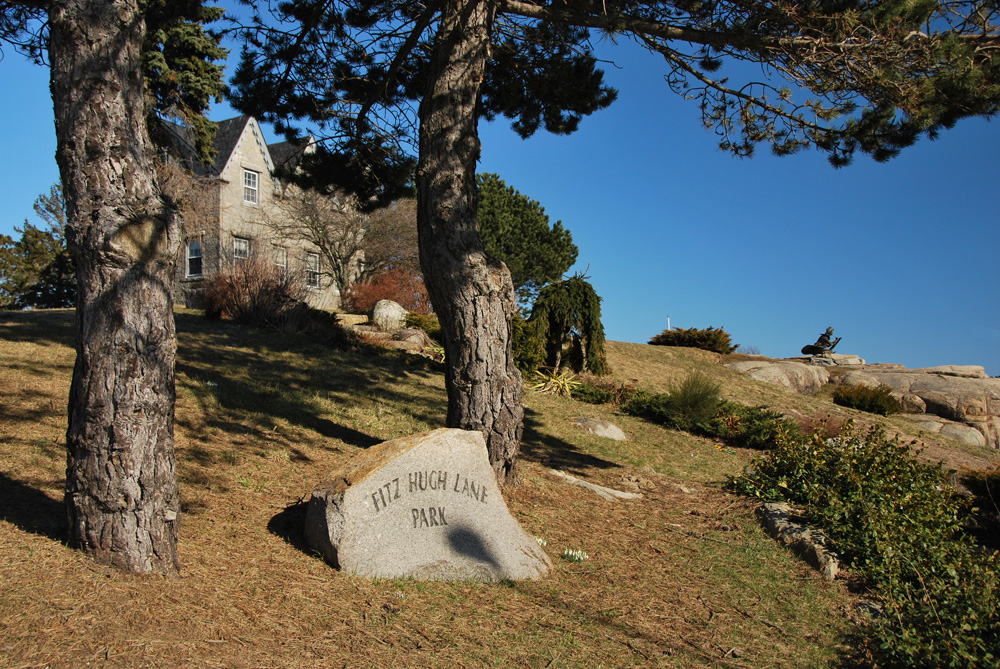
Fitz Hugh Lane House
Fitz Hugh Lane House in Gloucester

At our May meeting, we decided to have a summer outing at the Fitzhugh Lane house in Gloucester. It’s very pretty. Look for the hill on Rogers Street, I think, not too big, but prominent overlooking the harbor. It’s not very far from the center. You’ll find it, and if not right away, I have found the Gloucester folk to be very helpful! Then, just find a parking spot and climb on up.

We are gathering at 11 a.m. on Saturday, June 19. Bring a lawn chair and some poems to share. Then, when we get hungry, we’ll go to the little restaurant nearby for sandwiches.

Hope to see you!