A soon-to-be published poetry book by Melissa Varnavas

I met Melissa Varnavas when she came to work at the Beverly Citizen newspaper back in the late 1990s. She became a great friend, joining the North Shore Poets’ Forum and sharing with fellow Forum members much that she was learning in her Master of Fine Arts program.

She then reached out to others in the poetry community of the North Shore, including the Tin Box Poets and the Salem Writers Group. She was full of joy and information and talent. She died much too soon, in August 2022, from cancer, at the very young age of 48.

With her husband Chris Terrell and Tin Box poets Javy Awan and Margaret Eckman, I helped select some of her marvelous poems for a book that will be off to the printer soon. We know her family, friends, fellow poets and others she met through the years will enjoy this upcoming book of Melissa’s poems. Until that is available, however, I hope the attached interview with Reach Arts member Agatha Morrell, with remind you of how charming, talented and wonderful she was.

The Ides of March Meeting

The North Shore Poets’ Forum is meeting on March 15 in the Barnet Gallery of the Beverly Public Library at 11 a.m. We obviously weren’t thinking about Julius Caesar or Brutus when we chose the date! However, I expect no one will be in a murderous mood, since Spring is definitely in the air. (Or am I delusional?)

If you are at all like me, you are finding the politics today a bit overwhelming. So, I found a neat website that invites writers of all sorts to submit work on politics and society. Here’s a quick summary:

“Writers for Democratic Action is thrilled to announce our … new online publication (which) is an opportunity to submit your writing on politics, society, and the world. We welcome and encourage diverse perspectives from across the US and abroad. No minimum publications or experience–we want powerful writing relevant to our time.”

Check it out and submit something of your own, perhaps.

March isn’t just about traitors and murder. It also celebrates the Irish, and I will bring a few poems. If you choose, please bring a favorite poem either about the Irish or Spring, which is really, per the Farmers’ Almanac, on the way. Also, bring a poem of your own to share at the meeting for gentle critique.

I usually end with a poem for you to peruse, but I am finding the changes to WordPress too hard. I just can’t figure out how to format a poem, since there is no poetry format. Sorry! So, I’ll leave with good wishes for a nice spring and an invitation to join the Poets’ Forum.

Meeting in the not-quite-spooky time

The North Shore Poets’ Forum will meet Saturday, Oct. 19, in the Barnet Gallery of the Beverly Public Library at 11 a.m.

The group last month decided to return to the 11 a.m. start time, which had been in effect for a kagillion years. They decided it would give everyone an extra half hour to wipe the sleepies from our eyes and gather a poem or two for gentle critique.

In addition, Cathryn gave away many of her poetry magazines which had been bursting off her book shelves. She may bring a few more this month.

She hopes on Saturday to share the origins of the American Halloween — with spooky monsters and ghouls, dress-ups, and lots of candy. Most of us know it has to do with the Christian ceremonies of All Saints Day, November 1, and All Souls Day, Nov. 2. But why candy? Why Trick or Treat?

To set the tone, here’s a poem for the season.

The Black Cock

By Ishmael Reed
 for Jim Hendrix, hoodoo from his natural born

He frightens all the witches and the dragons in their lair
He cues the clear blue daylight and He gives the night its dare
He flaps His wings for warning and He struts atop a mare
for when He crows they quiver and when He comes they flee

In His coal black plumage and His bright red crown
and His golden beaked fury and His calculated frown
in His webbed footed glory He sends Jehovah down
for when He crows they quiver and when He comes they flee

O they dance around the fire and they boil the gall of wolves
and they sing their strange crude melodies and play their
weirder tunes and the villagers close their windows and the grave-
yard starts to heave and the cross wont help their victims and
the screaming fills the night and the young girls die with
open eyes and the skies are lavender light
but when He crows they quiver and when He comes they flee

Well the sheriff is getting desperate as they go their nature’s way
killing cattle smothering infants slaughtering those who block their way
and the countryside swarms with numbness as their magic circle grows
but when He crows they tremble and when He comes they flee

Posting hex-signs on their wagons simple worried farmers pray
passing laws and faking justice only feed the witches brew
violet stones are rendered helpless drunken priests are helpless too
but when He crows they quiver and when He comes they flee

We have seen them in their ritual we have catalogued their crimes

we are weary of their torture but we cannot bring them down
their ancient hoodoo enemy who does the work, the trick,
strikes peril in their dead fiend’s hearts and pecks their flesh to quick
love Him feed Him He will never let you down
for when He crows they quiver and when He comes they frown


Happy New Year at the Poets Forum

The North Shore Poet’s Forum will meet Saturday, Sept. 28, at 10:30 a.m., in the Sohier Room of the Beverly Public Library. This is a bit unusual since we normally meet on the 3rd Saturday of the month, but I couldn’t make it last week, and members voted to postpone one week. You may bring food, but be discreet, as usual.

I had no great ideas for a program this month, but I do have lots of poetry magazines that I decided to give to any of you who may want them. They include Poetry, Rattle, Ploughshares, Alaska Quarterly Review (one copy….I don’t know why I have it), and The Sun. There may be more. I have too, too many. And, I thought, it might be fun to read a few and vote on whether we would have chosen to publish them. I think that would be a refreshing and heartening exercise. Oh, I also get The New Yorker, and we all know how many great poets have had work published there. I’m not that impressed with many these days, but it could be because I’m not that smart.

It’s Autumn! Today! First day! So, I’ll leave you with a Fall poem, by Robert Gibb, For the Chipmunk in My Backyard. I like this one so much, I might look up more of his poems.

For the Chipmunk in My Backyard


I think he knows I’m alive, having come down
The three steps of the back porch
And given me a good once over. All afternoon
He’s been moving back and forth,
Gathering odd bits of walnut shells and twigs,
While all about him the great fields tumble
To the blades of the thresher. He’s lucky
To be where he is, wild with all that happens.
He’s lucky he’s not one of the shadows
Living in the blond heart of the wheat.
This autumn when trees bolt, dark with the fires
Of starlight, he’ll curl among their roots,
Wanting nothing but the slow burn of matter
On which he fastens like a small, brown flame.

Thinking in images

The North Shore Poets’ Forum met on Saturday, April 20, and enjoyed a very interesting workshop by Sandy Hokanson entitled, “Turning abstract terms into concrete images.”

Her inspiration was a book she read years ago entitled “Writing Poetry: Creative and Critical Approaches.” Written by Chad Davidson and Greg Fraser, she credited It with changing her approach to writing.

She had a worksheet with 50 or more abstract terms such as: courage, happiness, kindness, anger, beauty, etc. Members then thought up and shared descriptive words or phrases to convey those terms.

We then shared our own poems for gentle critique.

Our next meeting is May 18 in the Sohier Room of the Beverly Public Library, 10:30 a.m.. to 12:30 p.m. I will do my best to present a program, to be announced.

Cheers!

Spring dreams

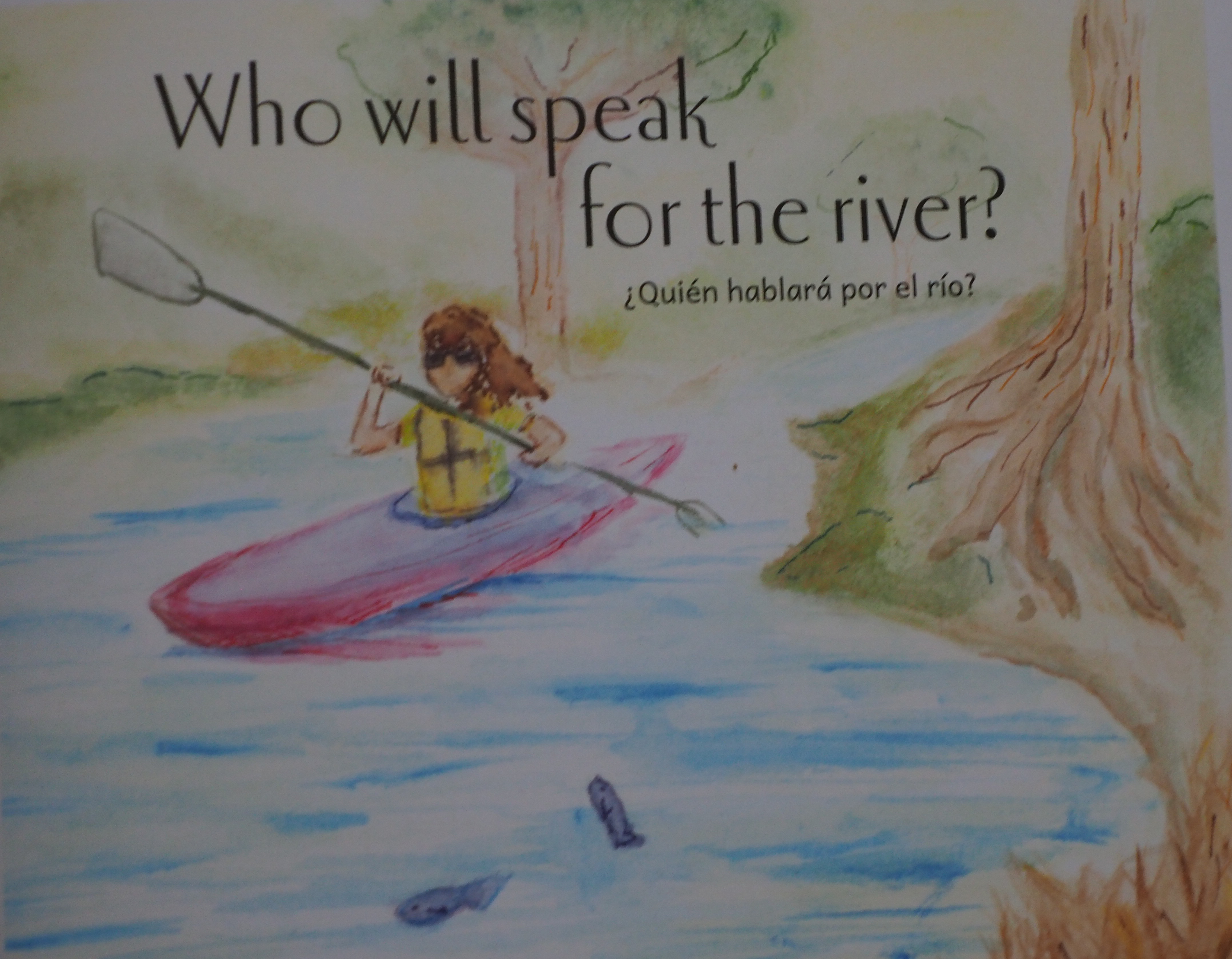
North Shore Poets’ Forum members gathered at the Beverly Public Library on March 16, an almost-spring day, for our first meeting since last year. Susan Hathaway presented information about self-publishing her lovely children’s book, “Who will Speak for the River,” focused on the Ipswich River.

The Ipswich River has been recognized as the eighth most endangered river in the US, serving as the water supply for 14 North Shore communities and as a very popular recreation area for canoeing, fishing, picnicking, hiking. Susan is a member of the Middleton Stream Team and knows the issues — too little water for too many people to rely on for day-to-day living. She hoped to garner more attention to the need for conservation with the book and to inspire children to cherish and care about this precious resource.

Actually, she has two version of the same book, one in English and Spanish, the other in English and Vietnamese. She found a high schooler, Molly, and a seventh grader, Jack, to draw colorful and graceful pictures that capture the beauty of the river and environs.

Susan is now learning how to market the book. As a first step, you are invited to email her at schmwl02@yahoo.com. Put your interest in the subject line. Cost is $13.95 plus shipping. Profits will go toward conservation of the river.

After much discussion, we then read our poems for gentle critique. Our next meeting is Saturday, April 20, 10:30 to 12:30, in the Will Barnet Gallery of the Beverly Public Library. Sandy Hokanson will give a presentation, topic to be determined.

A new season begins

The North Sore Poets’ Forum will meet on Sat., March 16, in the Barnet Gallery, Beverly Public Library, from 10:30 to 12:30.

Susan Hathaway will give a presentation on self publishing, with which she has experience. We will discuss future meetings, a possible Round Robin, and share a bit of Irish poetry, since St. Patrick’s Day is the next day.

Spring is on our doorstep, and even though it was a pretty easy winter, Spring is always a welcome respite from cold and dreary landscapes. I hope you all bring good cheer and  your poems — with copies — for gentle critique.

Until then, here’s a poem by John Hewitt

The Ram’s Horn

I have turned to the landscape because men disappoint me:
the trunk of a tree is proud; when the woodmen fell it,
it still has a contained Ionic solemnity:
it is a rounded event without the need to tell it.

I have never been compelled to turn away from the dawn
because it carries treason behind its wakened face:
even the horned ram, glowering over the bog-hole,
though symbol of evil, will step through the blown grass with grace.

Animal, plant, or insect, stone or water
are, every minute, themselves; they behave by law.
I am not required to discover motives for them,
or strip my heart to forgive the rat in the straw.

I live my best in the landscape, being at ease there;
the only trouble I find I have brought in my hand.
See, I let it fall with a rustle of stems in the nettles,
and never for a moment suppose that they understand.

A small but happy gathering

The North Shore Poets’ Forum met in the Sohier Room of the Beverly Public Library this morning, Nov. 18th, with a handful of happy, enthusiastic members. We discussed the poetry of Louise Gluck, who died on Oct. 13 at age 80. She won just about every award possible, including a Pulitzer, National Book Award, a Bollinger and a Nobel.

Because of anorexia beginning in her high school years, she had been unable to attend college fulltime. But her love of poetry, which began as a youngster, led her to study the subject at Sarah Lawrence from 1963-67, followed by a number of years at Columbia University’s School of General Studies for non-degree students. There she found wonderful mentors in Stanley Kunitz and Leonie Adams, whom she credited with her poetic development.

The critiques of her work are full of praise. Here’s a sampling:
The Nobel judges praised “her unmistakable poetic voice that with austere beauty makes individual existence universal.”

Poetry Magazine notes her ability “to create poetry that many people can understand, relate to, and experience intensely.”
Wendy Lesser, in her review of Gluck’s “The Triumph of Achilles,” notes she is “staunchly straight forward, remarkably close to the diction of ordinary speech. Yet her careful selection for rhythm and repetition, and the specificity of her idiomatically vague phrases, give her poems a weight that is far from colloquial.”

You can find many more accolades.

We also discussed possible changes to our schedule since so many of our group have trouble making it to the meetings. We made no decisions and will continue to meet on the third Saturday of the month, at 10:30 a.m. at the Beverly Library. But, let us know your thoughts in the meantime. E-mail Cathryn O’Hare, ckohare@gmail.com.

We did decide that in March Susan Picole will present a program on how to self publish. She is almost finished two editions of the same children’s book, one in both English and Spanish and a second in English and Vietnamese. It is about saving the Ipswich River, and the illustrations are lovely. She will tell us how she found the illustrators, the Library of Congress numbers, and much more. Join us on March 16, 10:30 a.m., 2024.

Also, we decided to place flyers in our libraries about our group, hoping to attract new members. Please help! I will try to create one and will send it out in an email.

So, look under the Tab on this blog for Meetings to get the schedule, which I will update as we make further decisions

Now for a Louise Gluck poem. She often tackles endings and sadness, which you will find here.

The Garden

I couldn’t do it again,
I can hardly bear to look at it—

in the garden, in light rain
the young couple planting
a row of peas,  as though
no one had ever done this before,
the great difficulties have never as yet
been faced and solved—

They cannot see themselves,
in fresh dirt, starting up
without perspective,
the hills behind them all green, clouded with flowers—

She wants to stop;
he wants to get to the end,
to stay with the thing—

Look at her, touching his cheek
to make a truce, her fingers
cool with spring rain;
in thin grass, bursts of purple crocus—

even here, even at the beginning of love,
her hand leaving his face makes
an image of departure

and they think
they are free to overlook
this sadness.
Again, war


The Forum cancelled its Oct. 21 meeting. I will present a program on the recently deceased poet Louise Gluck during our Nov. 18 meeting, 10:30 am, Beverly Public Library, in the Sohier Room.

In the meantime, some thoughts. I think everyone is aware of what is going on in Palestine/Israel and Ukraine. Usually we don’t as a group discuss world events. However, I just read a few poems that had as a theme the awfulness of war. In particular, I read Wilfred Owen’s poem about the horror of WWI, which you can find online on the Poetry Foundation site. I share it with you here. 

Dulce et Decorum Est 

Bent double, like old beggars under sacks,
Knock-kneed, coughing like hags, we cursed through sludge,
Till on the haunting flares we turned our backs,
And towards our distant rest began to trudge.
Men marched asleep. Many had lost their boots,
But limped on, blood-shod. All went lame; all blind;
Drunk with fatigue; deaf even to the hoots
Of gas-shells dropping softly behind.
 
Gas! GAS! Quick, boys!—An ecstasy of fumbling
Fitting the clumsy helmets just in time,
But someone still was yelling out and stumbling
And flound’ring like a man in fire or lime.—
Dim through the misty panes and thick green light,
As under a green sea, I saw him drowning.
 
In all my dreams before my helpless sight,
He plunges at me, guttering, choking, drowning.
 
If in some smothering dreams, you too could pace
Behind the wagon that we flung him in,
And watch the white eyes writhing in his face,
His hanging face, like a devil’s sick of sin;
If you could hear, at every jolt, the blood
Come gargling from the froth-corrupted lungs,
Obscene as cancer, bitter as the cud
Of vile, incurable sores on innocent tongues,—
My friend, you would not tell with such high zest
To children ardent for some desperate glory,
The old Lie: Dulce et decorum est
Pro patria mori.
Notes:

Latin phrase is from the Roman poet Horace: “It is sweet and fitting to die for one’s country.”


Rain, rain, wind and storms

Our summer outing was a no go because we couldn’t find a spot we all agreed on, and our September meeting was cancelled because of a storm. It seems as though we have had at least 40 days and 40 nights of rains, although not all in a row, which is good, because we’d all be going crazy. So, here’s hoping the sky will be blue and the sun shining for our next meeting on Oct. 21, 10:30 a.m., in the Sohier Room of the Beverly Public Library, Essex Street, Beverly. I will add more information as we get closer to the date

I’m having trouble with WordPress, so I broke the stanzas with dots so that you can enjoy this wonderful poem by Stanley Kunitz.

End of Summer

BY STANLEY KUNITZ

An agitation of the air,

A perturbation of the light

Admonished me the unloved year

Would turn on its hinge that night.

….

I stood in the disenchanted field

Amid the stubble and the stones,

Amazed, while a small worm lisped to me

The song of my marrow-bones.

Blue poured into summer blue,

A hawk broke from his cloudless tower,

The roof of the silo blazed, and I knew

That part of my life was over.

Already the iron door of the north

Clangs open: birds, leaves, snows

Order their populations forth,

And a cruel wind blows.