The deadline is fast approaching for the Mass. State Poetry Society’s annual National Poetry Day Contest. It’s Aug. 1, so hurry up and get your poems typed up and sent by that date.
Maybe some of you entered the National Federal of State Poetry Societies‘ annual contest. I did, and according to its website they will post the winners soon. Can’t wait. I haven’t entered in years and years, because I’ve been so busy and distracted and stressed and lacking in self-confidence. The latter is still true, but I’m happy to say I quit my job at the newspaper after 13 years and look forward to a better, less stressful and more lucrative life! Here’s my goodbye editorial to the readers of the Danvers Herald, in case you’re interested.
It is almost August, which is my favorite month. But, July 4 is almost my favorite day, with its summer sun high and hot and the day long with seasonal celebrations.
The weather has been glorious, with gusts of wind rippling the leaves into applause for so much beauty. I am very happy, and I hope all the poets and poetry lovers/likers reading this are, too.
Best wishes in the contests! But, you can’t win unless you enter, as the Lottery hawkers say.
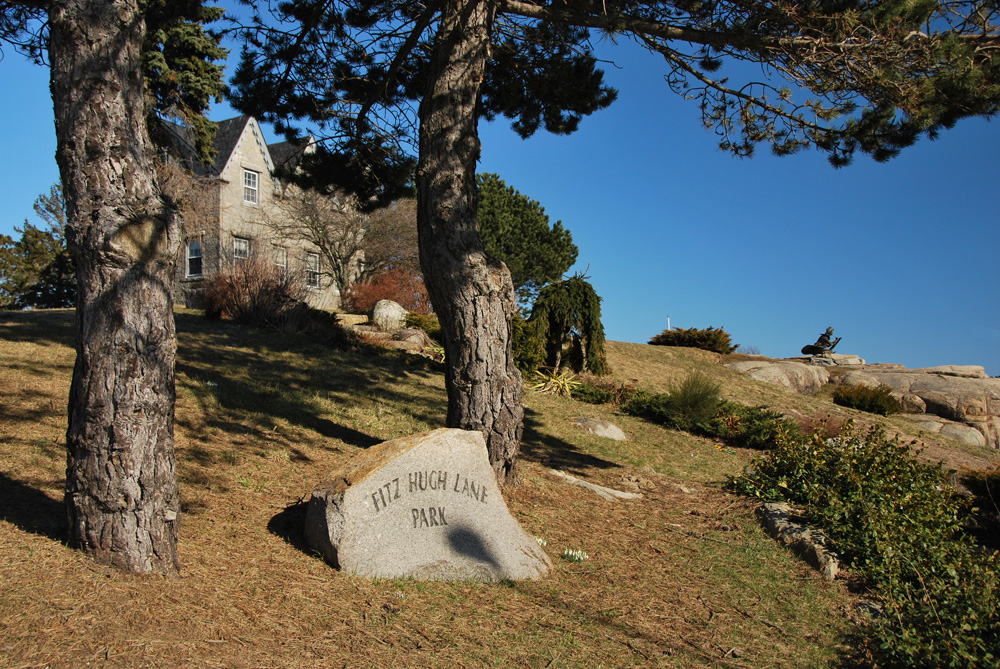
At our May meeting, we decided to have a summer outing at the Fitzhugh Lane house in Gloucester. It’s very pretty. Look for the hill on Rogers Street, I think, not too big, but prominent overlooking the harbor. It’s not very far from the center. You’ll find it, and if not right away, I have found the Gloucester folk to be very helpful! Then, just find a parking spot and climb on up.
We are gathering at 11 a.m. on Saturday, June 19. Bring a lawn chair and some poems to share. Then, when we get hungry, we’ll go to the little restaurant nearby for sandwiches.
It is for me a day of rest, of planting tomatoes, of weeding the flower beds, of relaxing in the warmth of the yellow sun.
But before all that, I may go to Danvers Town Hall to observe Memorial Day, walk along part of the parade route, record the band for a video. I am the editor of the paper. But, since I also have a cold, and since Community Editor Myrna Fearer will also be there, I may not go.
Still, there is something very folksy and old-fashioned about the Danvers Memorial Day Parade. It brings to mind the parades of my youth, when I marched with the Brownies or, after I’d quit, ran alongside my friends who belonged to some other troop. It was a fun time, not at all sombre. I didn’t listen to the speeches. Unfortunately, now I do.
They’re not eloquent. After all, there aren’t very many Abraham Lincolns in the world who can hit the absolute perfect pitch of sadness, regret, and respect for the sacrifices made by those who serve and by those whose sons, fathers, brothers — and today, daughters, mothers, sisters — are maimed or killed.
I am in general a pacifist. So, sometimes it is difficult for me to listen to these annual, hometown speeches, since they tend to include a little glorification of war along with honor for those who serve. War is not glorious. It is the greatest failure of human beings, no matter how heroic its participants are individually and collectively. It is an abomination.
Wilfred Owen, an English soldier and poet, died a few days before the end of World War I. He was 25, I think. He is one of the greatest anti-war poets ever. Just think, had he lived, what he might have achieved!
Spring can really hang you up the most. Those words were in a song on a record by Jackie and Roy ( I think that was the name of the very talented duo) that my parents used to play. It was a love song, of course. Spring and love do seem to go together. It was also a bit of a melancholy love song, which also seem to go together all too often.
Which is all an introduction to an apology for being lax about the blog! Spring hung me up with this and that… none of which had to do with sad love songs, just a general malaise when my work was done, or a bit of gardening when the sun shone, and other excuses.
So, I am going to share a great and silly poem (although probably quite pithy, too) by Edward Lear.
For your reading pleasure, then …
The Owl and the Pussycat
I
The Owl and the Pussy-cat went to sea
In a beautiful pea green boat,
They took some honey, and plenty of money,
Wrapped up in a five pound note.
The Owl looked up to the stars above,
And sang to a small guitar,
‘O lovely Pussy! O Pussy my love,
What a beautiful Pussy you are,
You are,
You are!
What a beautiful Pussy you are!’
II
Pussy said to the Owl, ‘You elegant fowl!
How charmingly sweet you sing!
O let us be married! too long we have tarried:
But what shall we do for a ring?’
They sailed away, for a year and a day,
To the land where the Bong-tree grows
And there in a wood a Piggy-wig stood
With a ring at the end of his nose,
His nose,
His nose,
With a ring at the end of his nose.
III
‘Dear pig, are you willing to sell for one shilling
The poetry reading and celebration of National Poetry Month is today, at the Beverly Public Library, 11 a.m. Come to the Barnett Room, which is down the hall from where we usually meet.
They have been chosen, and as usual, the choosing among so many good entries was not easy. There were 89 entries in all, and I have begun informing the winners who they are. Those with e-mail addresses will be first, for obvious reasons. I’ll try to call others tomorrow. And, one will have to wait for snail mail, since I don’t have either an e-mail address or telephone number.
In any case, I hope all the winners, and in fact all those who entered and all those who didn’t enter, will join the forum members on Saturday, April 17, for a reading in celebration of National Poetry Month, at the Beverly Public Library. It begins at 11 a.m. and usually lasts about two hours. We have light refreshments available to keep anyone from keeling over. Winners are asked to read first, then the floor is open for other poets to share their work.
Well, drum roll, please, as we announce our winners, and congratulations to all.
——————————————–
First prize: Lee Eric Freedman, “Reflected Figs – four Meditations”
Second: Margaret Eckman, “Oldsquaws”
Third: Brad Pettingell, “only child”
Eight honorable mentions were also awarded, without specific ranking:
This is just a quick note to say that the winners of the North Shore Poets’ Forum annual Naomi Cherkofsky contest will be notified this week.
Look here for their names. And, please remember to join the Forum on Saturday, April 17, at the Beverly Public Library, 1 p.m., for the annual reading of the winners’ poems and open mic in honor of National Poetry Month.
William Butler Yeats was born in 1865 and died in 1939, and he is considered one of the leaders of the Irish Renaissance – perhaps the most important. One of my favorite of his poems is The Second Coming. If you’re not familiar with it, just jump onto google and you’re bound to find it. Here are a couple of others, the first very anti-war and the latter full of the woe of the Irish who suffered so much under Cromwell that his memory is a horror.
The Great Day
W. B. Yeats
Hurrah for revolution and more cannon-shot!
A beggar upon horseback lashes a beggar on foot.
Hurrah for revolution and cannon come again!
The beggars have changed places, but the lash goes on.
The Curse of Cromwell
You ask what I have found, and far and wide I go:
Nothing but Cromwell’s house and Cromwell’s murderous crew,
The lovers and the dancers are beaten into the clay,
And the tall men and the swordsmen and the horsemen, where are they?
And there is an old beggar wandering in his pride – –
His fathers served their fathers before Christ was crucified.
O what of that, O what of that,
What is there left to say?
All neighbourly content and easy talk are gone,
But there’s no good complaining, for money’s rant is on.
He that’s mounting up must on his neighbour mount,
And we and all the Muses are things of no account.
They have schooling of their own, but I pass their schooling by,
What can they know that we know that know the time to die?
O what of that, O what of that,
What is there left to say?
But there’s another knowledge that my heart destroys,
As the fox in the old fable destroyed the Spartan boy’s
Because it proves that things both can and cannot be;
That the swordsmen and the ladies can still keep company,
Can pay the poet for a verse and hear the fiddle sound,
That I am still their servant though all are underground.
O what of that, O what of that,
What is there left to say?
I came on a great house in the middle of the night,
Its open lighted doorway and its windows all alight,
And all my friends were there and made me welcome too;
But I woke in an old ruin that the winds howled through;
And when I pay attention I must out and walk
Among the dogs and horses that understand my talk.
Given my name, which is three parts Irish, one can hardly be surprised that I would have some affection for the old country. So, with St. Patrick’s Day on the horizon, I have decided to post some Irish poetry, old and not so old, for your reading pleasure.
Of course, I’m as American as they come, with a lot of Irish ancestors. And, I married a man with mostly Irish ancestors. Both of us have a bit of English and/or Scottish. Who knows? My mother spoke of some Scottish ancestor who rowed, or in some other way managed to make it to Clonmany in the far northern part of Donegal, across the waters from some island off the northern coast of Scotland. And, my husband has Wilsons in the lineage, and god knows what they are. So, we aren’t 100 percent.
But, many of the Irish aren’t 100 percent either, since as a people they had always been good at assimilating conquerors, from the Celts to the Danes and Vikings of various sorts. The red hair is supposedly from the Vikings, or so I read somewhere. The Normans made themselves at home in the little isle, with names like Fitzgerald — said to come from fine Norman stock, as are many other Irish of proof-positive names. Even, perhaps, the O’Hares.
Many a good Englishman became enamored of the country they called home for centuries, so that one can hardly say they aren’t Irish, a topic explored by poets like John Hewitt and playwrights like Brian Friel today. The age-old pock-marked history of Irish Catholics and Protestants, too, is a bit of a blur when speaking of such great Protestant Irish nationalists like Yeats and Synge, at the forefront of the 20th century Irish Renaissance in letters, were Protestants from way back, but Irish nationalists for sure.
Power and greed did their best to keep people at each other’s throats, using politics and religion to achieve their own simple ends.
An old story, always reinventing itself for present-day telling. Where to look? Please!
In any case, with St. Patrick’s Day a couple of week’s away, I have decided to share some Irish poems. Once before in this blog I had chosen for your reading pleasure a poem by Coman, called “To Coman Returning,” which the editor of “The Book of Irish Verse,” John Montague, said was most probably from the 9th century. (See entry called “My son is home,” from October.)
Here is another, about the Flight of the Earls –just google it for more information. In brief, the heads of the powerful families of Ulster, which was the epicenter of resistance to the English reconquest of Ireland, fled Ireland in 1607 for Europe, hoping to win Spanish help.
 North Shore Poets' Forum