Given my name, which is three parts Irish, one can hardly be surprised that I would have some affection for the old country. So, with St. Patrick’s Day on the horizon, I have decided to post some Irish poetry, old and not so old, for your reading pleasure.
Of course, I’m as American as they come, with a lot of Irish ancestors. And, I married a man with mostly Irish ancestors. Both of us have a bit of English and/or Scottish. Who knows? My mother spoke of some Scottish ancestor who rowed, or in some other way managed to make it to Clonmany in the far northern part of Donegal, across the waters from some island off the northern coast of Scotland. And, my husband has Wilsons in the lineage, and god knows what they are. So, we aren’t 100 percent.
But, many of the Irish aren’t 100 percent either, since as a people they had always been good at assimilating conquerors, from the Celts to the Danes and Vikings of various sorts. The red hair is supposedly from the Vikings, or so I read somewhere. The Normans made themselves at home in the little isle, with names like Fitzgerald — said to come from fine Norman stock, as are many other Irish of proof-positive names. Even, perhaps, the O’Hares.
Many a good Englishman became enamored of the country they called home for centuries, so that one can hardly say they aren’t Irish, a topic explored by poets like John Hewitt and playwrights like Brian Friel today. The age-old pock-marked history of Irish Catholics and Protestants, too, is a bit of a blur when speaking of such great Protestant Irish nationalists like Yeats and Synge, at the forefront of the 20th century Irish Renaissance in letters, were Protestants from way back, but Irish nationalists for sure.
Power and greed did their best to keep people at each other’s throats, using politics and religion to achieve their own simple ends.
An old story, always reinventing itself for present-day telling. Where to look? Please!
In any case, with St. Patrick’s Day a couple of week’s away, I have decided to share some Irish poems. Once before in this blog I had chosen for your reading pleasure a poem by Coman, called “To Coman Returning,” which the editor of “The Book of Irish Verse,” John Montague, said was most probably from the 9th century. (See entry called “My son is home,” from October.)
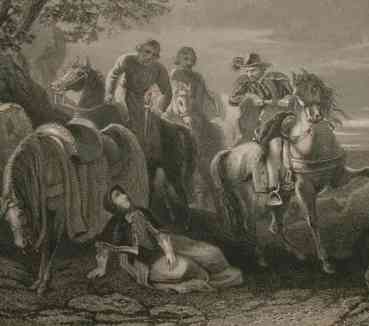
Here is another, about the Flight of the Earls –just google it for more information. In brief, the heads of the powerful families of Ulster, which was the epicenter of resistance to the English reconquest of Ireland, fled Ireland in 1607 for Europe, hoping to win Spanish help.
This night sees Ireland desolate
By Aindrais MacMarcuis
Version: Robin Flower
This night sees Eire desolate,
Her chiefs are cast out of their state;
Her men, her maindens weep to see
Her desolate that should peopled be.
….
How desolate is Connla’s Plain,
Though aliens swarm in her domain;
Her rich bright soil had joy in these
That now are scattered overseas.
….
Man after man, day after day
Her noblest princes pass away
And leave to all the rabble rest
A land dispeopled of her best.
….
O’Donnell goes. In that stern strait
Sore-stricken Ulster mourns her fate,
And all the northern shore makes moan
To hear that Aodh of Annagh’s gone.
….
Men smile at childhood’s play no more,
Music and song, their day is o’er;
At wine, at Mass the kingdom’s heirs
Are seen no more, changed hearts are theirs.
….
They feast no more, they gamble not,
All goodly pastime is forgot,
They barter not, they race no steeds,
They take no joy in stirring deeds.
….
No praise in builded song expressed
They hear, no tales before they rest;
None care for books and none take glee
To hear the long-traced pedigree.
….
The packs are silent, there’s no sound
Of the old strain on Bregian ground.
A foreign flood holds all the shore,
And the great wolf-dog barks no more.
….
Woe to the Gael in this sore plight!
Henceforth they shall not know delight,
No tidings now their woe relieves,
Too close the gnawing sorrow cleaves.
….
These the examples of their woe:
Israel in Egypt long ago,
Troy that the Greek hosts set on flame,
And Babylon that to ruin came.
….
Sundered from hope, what friendly hand
Can save the sea-surrounded land?
The clan of Conn no Moses see
To lead them from captivity.
….
Her chiefs are gone. There’s none to bear
Her cross of lift her from despair;
The grieving lords take ship. With these
Our very souls pass overseas.
 North Shore Poets' Forum